The Story
Some names carry more than letters.
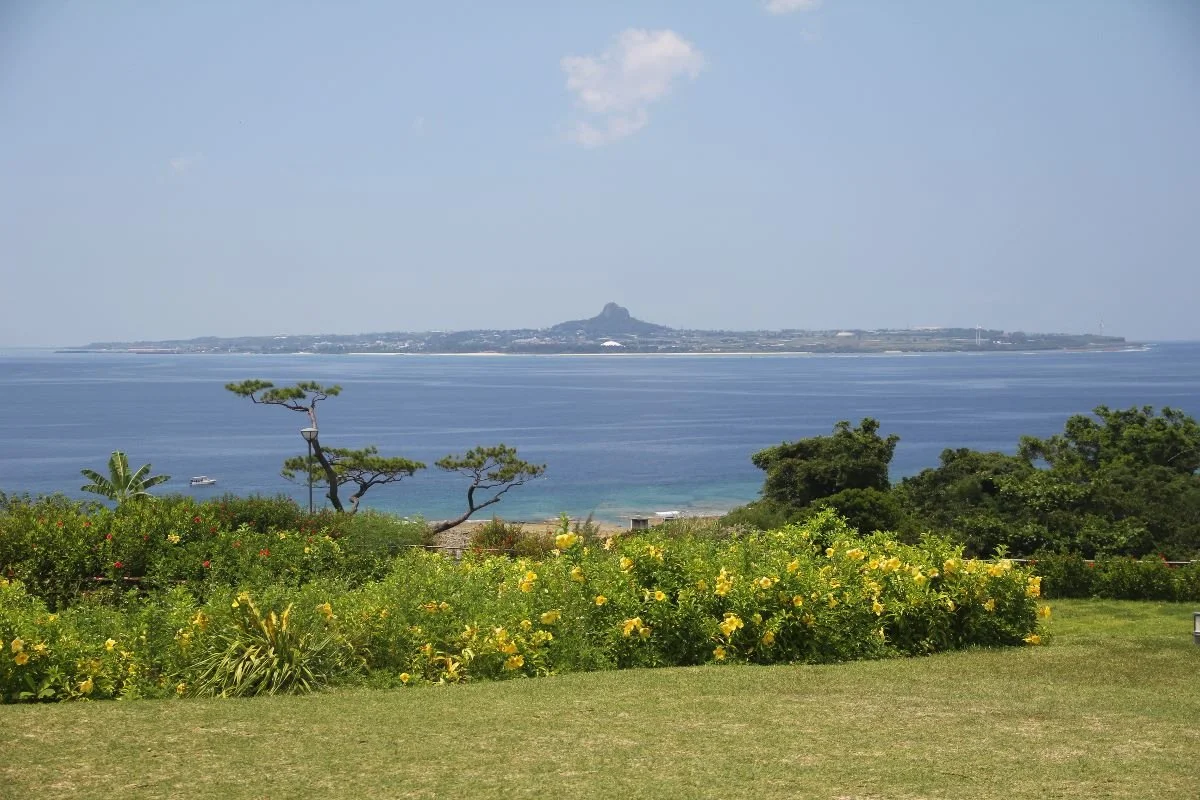
SHIGEYOSHI is my mother's family name. It comes from Okinawa — a small island with a long memory, a people who survived things that would have broken most, and a culture that found beauty anyway.
It is also, in the old meaning of the characters, a wish for abundant good fortune.
But to me, it is something simpler than that. It is the sound of everything she gave me.
This is where that name comes from.
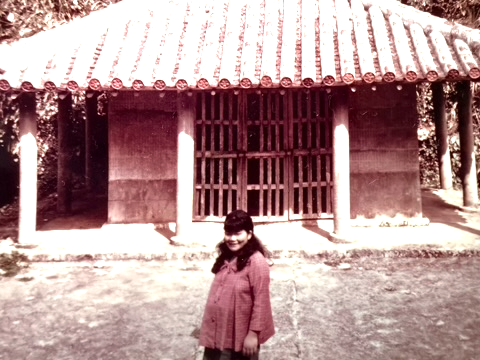
Itoman, Okinawa, February 1970
OKINAWA
My mother was standing in Itoman — the southern tip of Okinawa, the same ground where the war's final battles of World War II were fought. She had survived it as a four year old child. The building behind her may have survived it too. Someone took this picture on an ordinary day in February 1970, not knowing they were documenting something that would matter a number of years later.
She was pregnant with me.
My grandmother was from this same southern corner of the island — the Naha area. She was a young mother when the war came to Okinawa. She survived it. Some of her children did not — lost not to the fighting itself, but to what came after. Hunger. The slow violence of having nothing.
What she had left, she held tightly. She rebuilt. She kept going. That was simply what you did.
I spent the first four years of my life on this island. I didn't know then what I was absorbing — the light on the water, the warmth of the people, the way strangers picked up lost toddlers and held them up to the street until someone who loved them came running. You don't know you're being shaped. You just live it.
And then you carry it.
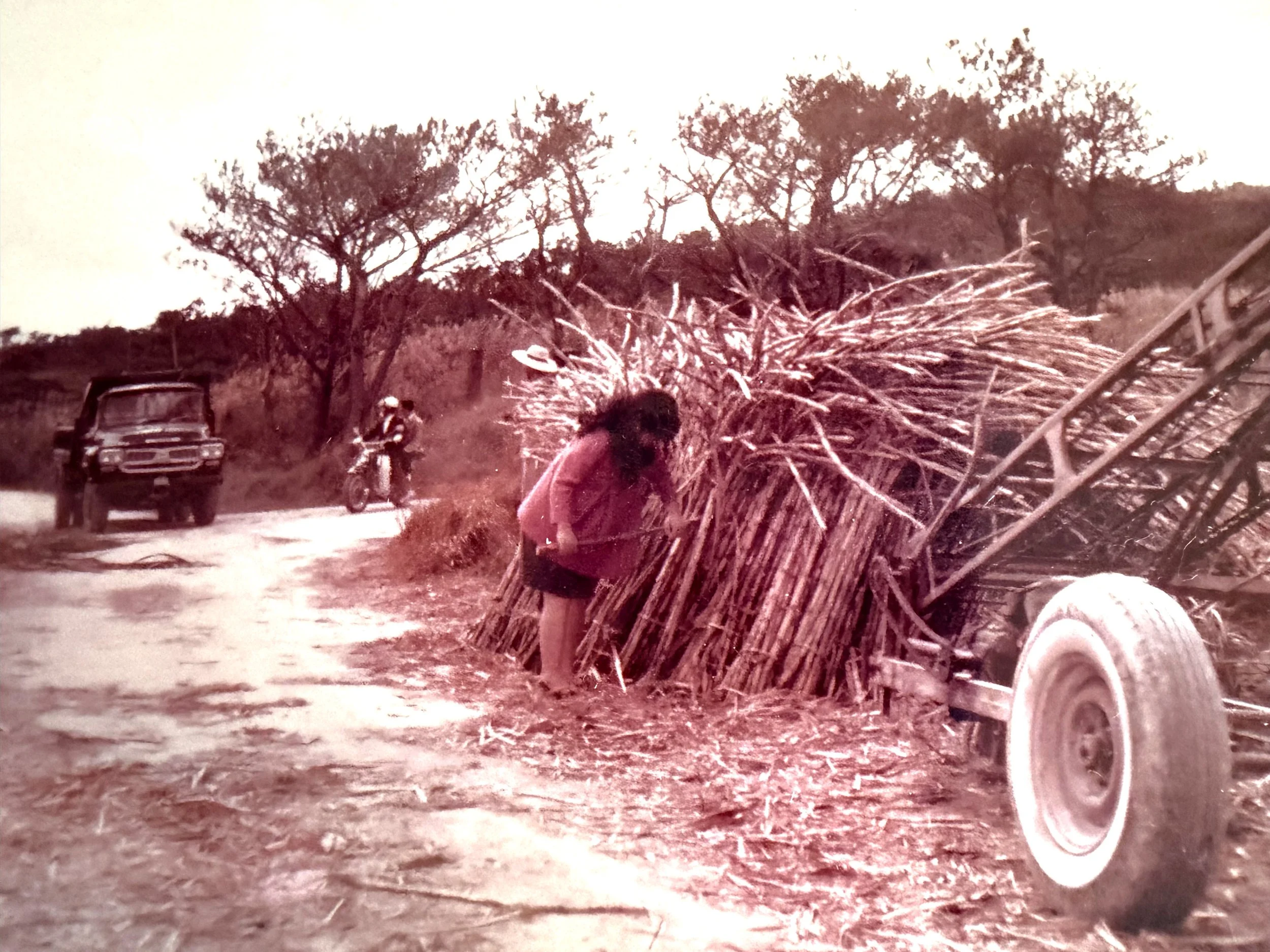
Okinawa, February 1970
SUGARCANE
She was pregnant and entirely herself. No performance, no posing — just a young woman on the side of an Okinawan road, looking for sugarcane to eat because it was there and it was sweet and that was reason enough.
That was her. Practical. Unselfconscious. Finding something good in whatever was in front of her.
She had grown up with very little. Her mother had rebuilt a life from nothing after the war, and somewhere in that rebuilding she had passed something down — not bitterness, not fear, but a quiet resourcefulness. You find what you need. You keep going.
It would be years before I understood what she had given me. But it was already there, being shaped, in the February light of Okinawa, 1969.
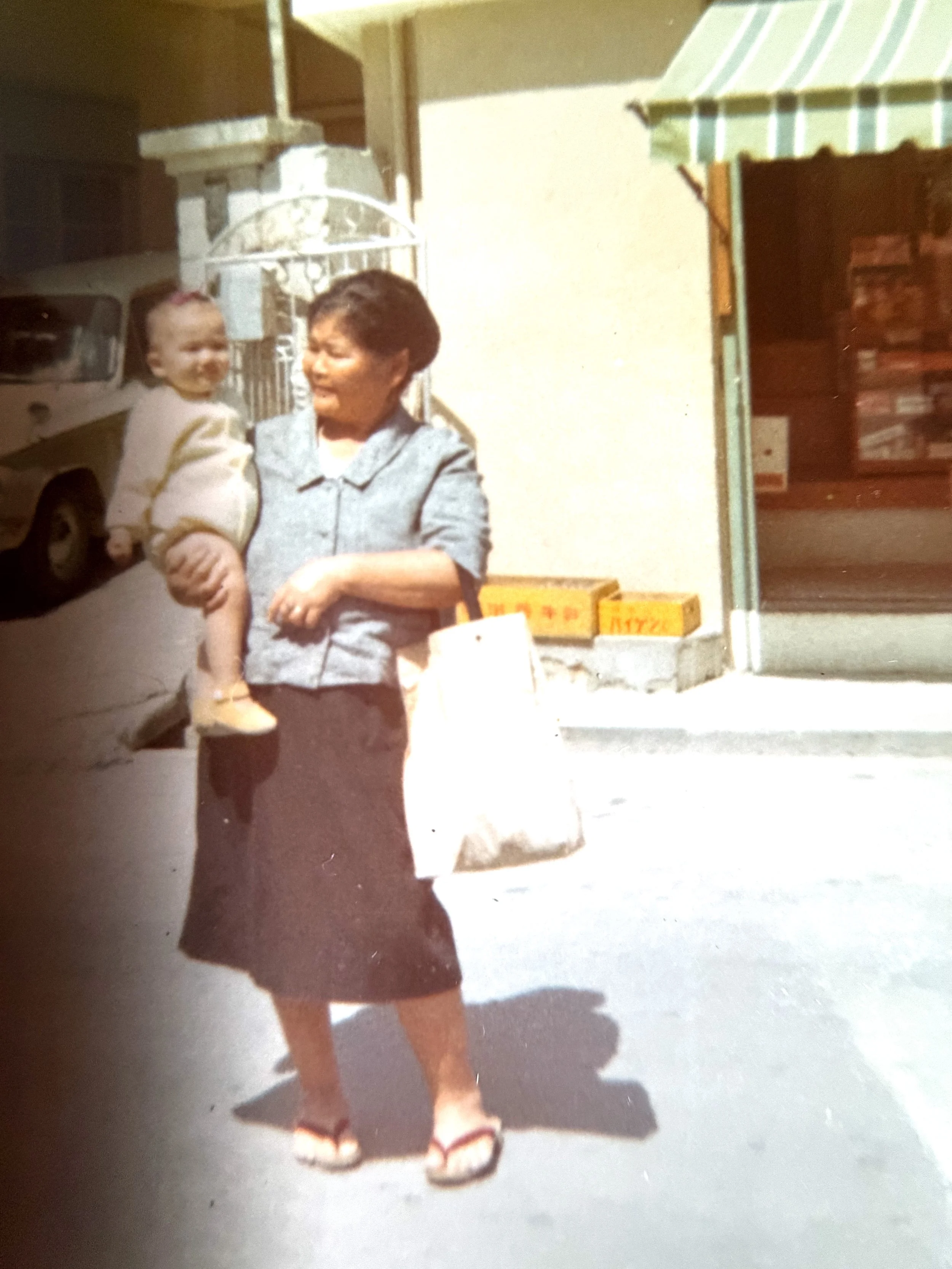
My grandmother. Okinawa, April 1971.
WANDERING TODDLER
This photo was taken on a shopping trip — my mother, my grandmother, and me. At thirteen months old, while my grandmother was distracted by something in a shop, I wandered off. My mother panicked. And then a toy store owner appeared in the middle of the street, holding me up in his arms, calling out to everyone who passed: "Whose child is this?"
That was me. Already exploring. Already wandering.
My mother told that story for years — laughing, shaking her head, probably a little gray hair earned that day. But what she always came back to was this: how safe it was. How honest the people were. A stranger picked up a lost child and held her up to the whole street without a second thought, certain someone who loved her was nearby.
He was right.
MY MOTHER
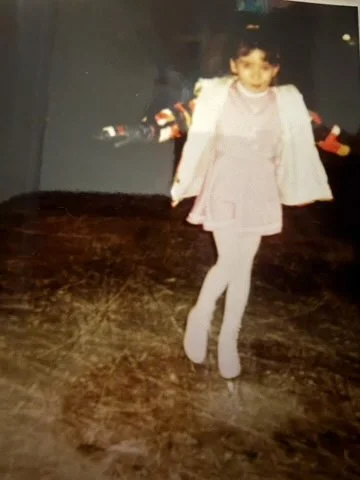
She was stern. She made sure I was respectful, that I stayed on the right path, that I never had reason to look for escape in the wrong places. She signed me up for everything — softball, volleyball, bowling, soccer, violin, piano, ice skating, swimming, skiing. She was raising me alone on a military widow's pension. What she provided shouldn't have been possible. But she found a way.
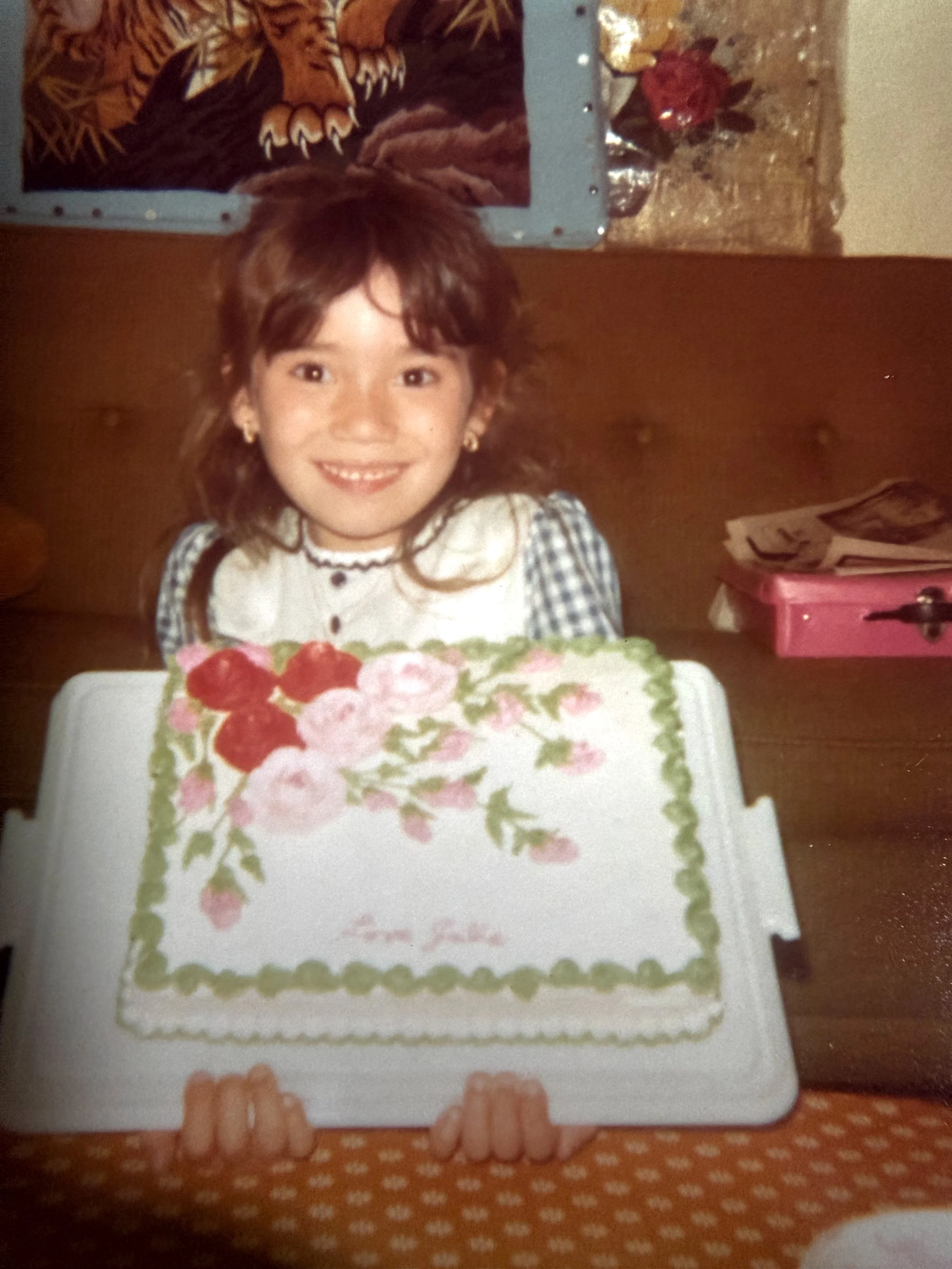
But there was another side to her that didn't announce itself. She sewed my dresses by hand — including the dress I wore on the ice. She decorated cakes with the kind of detail that belonged in a bakery window. She did intricate Japanese needlepoint. She showed up to my best friend's kitchen one day and cleaned it without being asked, without making a fuss, without needing to be thanked.
She was also, when she wanted to be, completely ridiculous. There was a Japanese game we played — the goal was to make a face so absurd the other person couldn't help but laugh. She was very good at it.
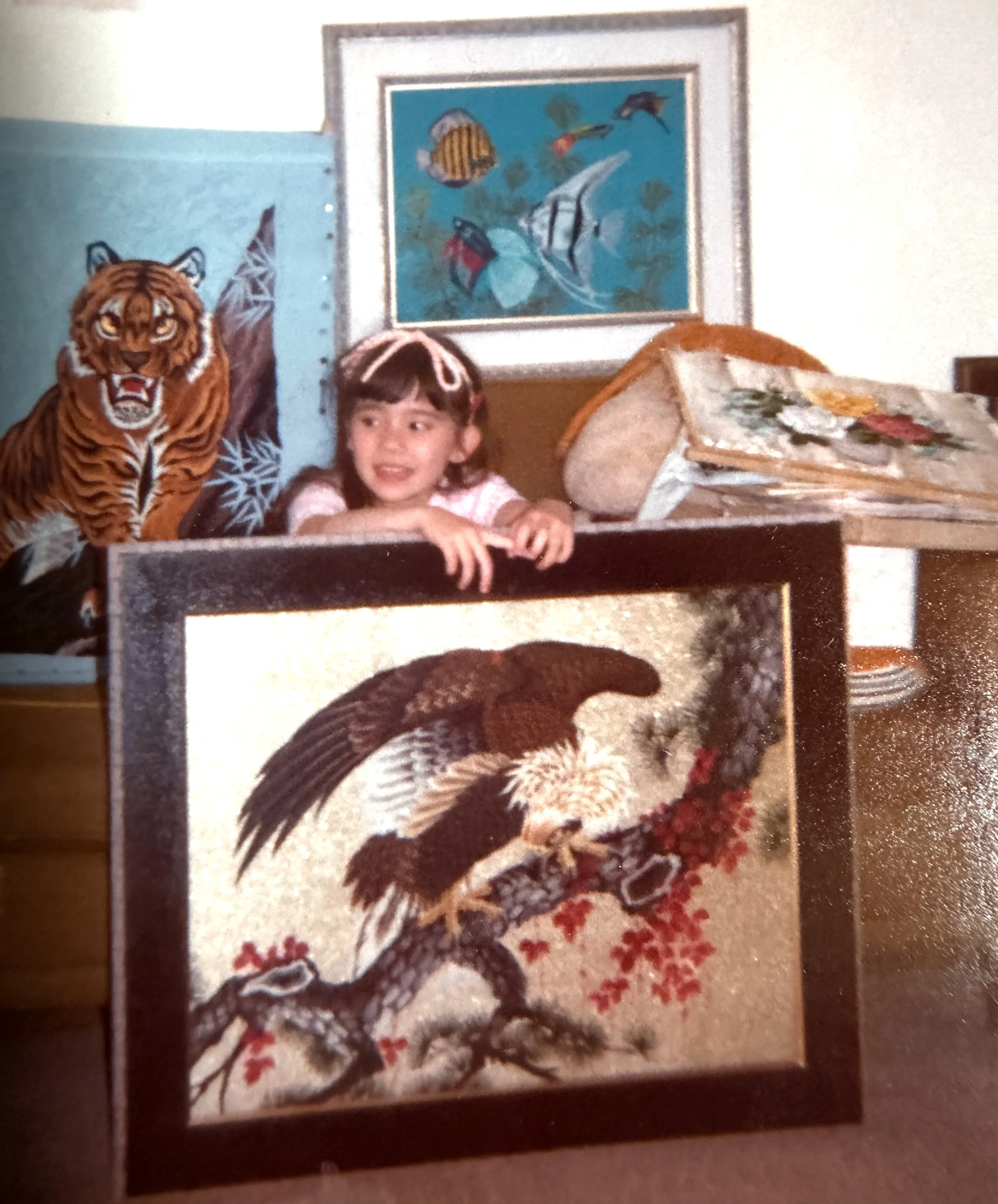
That was her real language. Not words. Hands. Showing up. Making things beautiful. Fixing what needed fixing.
There were years when we weren't close.
But she never stopped showing up.
APARTMENT FLOOR
My father had just died. We had to leave the military base. And suddenly there was just the two of us — in an empty apartment, second floor, dim light, no furniture, no clothes, nothing. Just my mother sitting on the carpet with her back against the wall and her legs straight out in front of her. I was four years old.
I don't know how long she sat there. I only know what I saw.
She started to cry. I didn't know why — I just noticed tears streaming down her face, so I laid across her lap and cried with her.
And then she lifted me up and looked at me.
“Stop crying. Be strong.”
She never let me see her cry again.
She was alone in a foreign country with a four year old daughter and nothing else. And she decided, in that moment on that floor, that this was how it was going to be. Not broken, but to move forward.
I didn't understand it then. I understand it now.
Everything she ever did after that came from that moment.
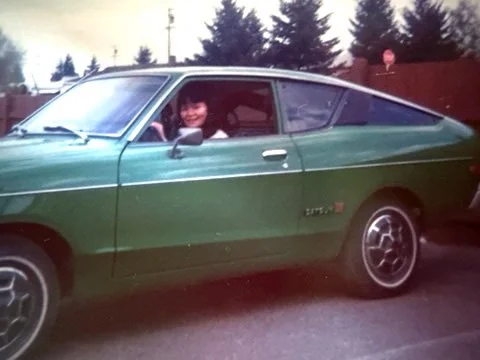
Her Datsun B210. Tacoma, Washington.
She was so proud of this car.
THE GREEN DATSUN B210
I was five years old when I first fell in love with the open road. I just didn't know it yet.
A neighbor needed help. She had children in South Dakota and needed someone to make the drive with her from Washington state to bring them home. My mother said yes — because that was who she was. You helped when someone needed it. You didn't make it complicated.
They both drove the same type of car — a green Datsun B210, taking turns behind the wheel, crossing the American West together.
I sat in the back seat and watched the world go by.
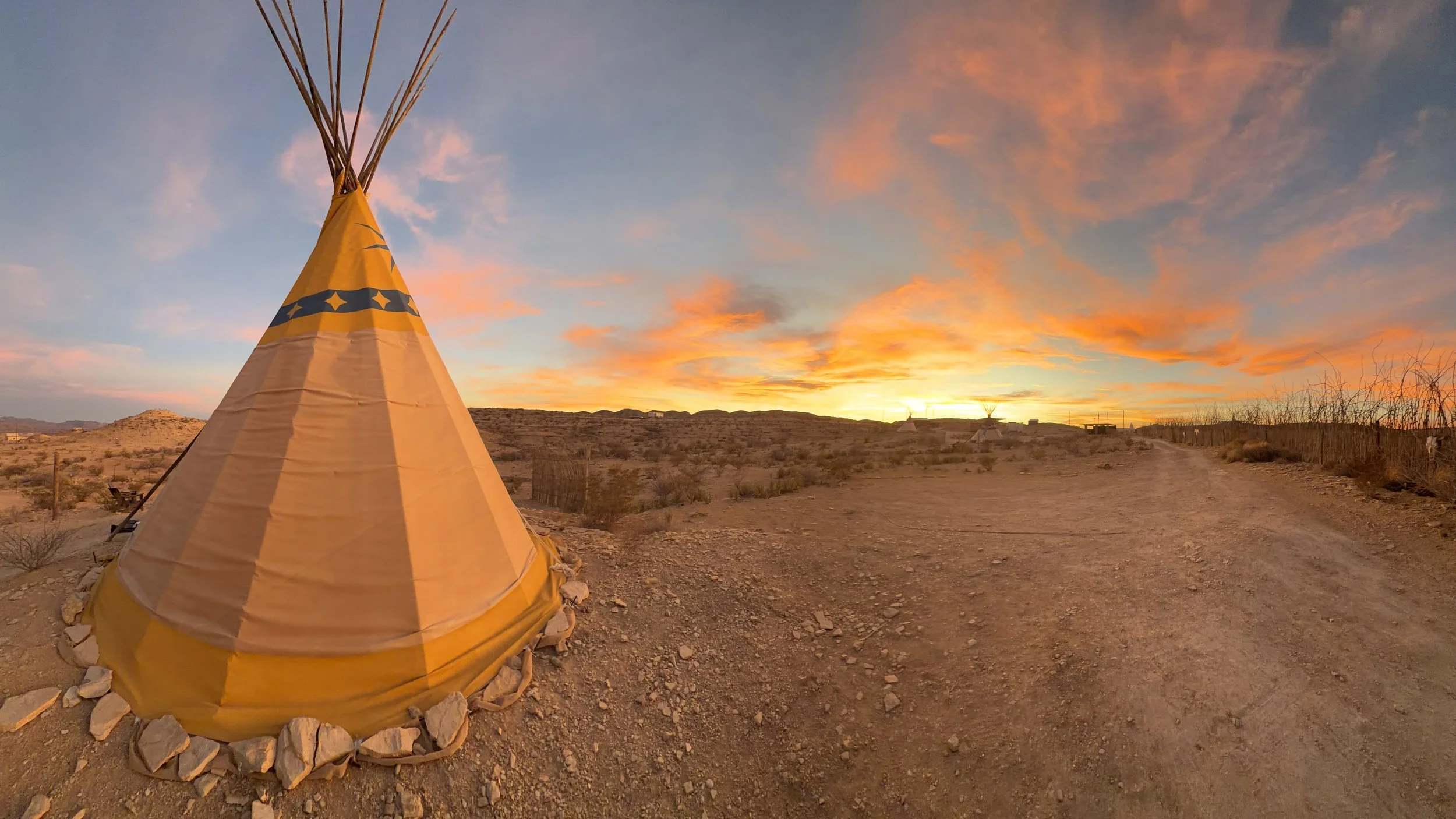
I remember visiting an Indian reservation somewhere along the way. I remember the landscape changing — the wide open land, the sky, the feeling of being small inside something enormous and beautiful. I was five years old and I had no words for any of it. I just felt it.
My mother didn't take that trip for herself. She took it for a neighbor. But somewhere in the back seat of a green Datsun B210, on a road between Washington and South Dakota, something was planted in me that never left.
Every road trip I've taken since traces back to that one.
The car is gone. The neighbor has long since moved on.
But I still feel the back seat. I still feel the sky.
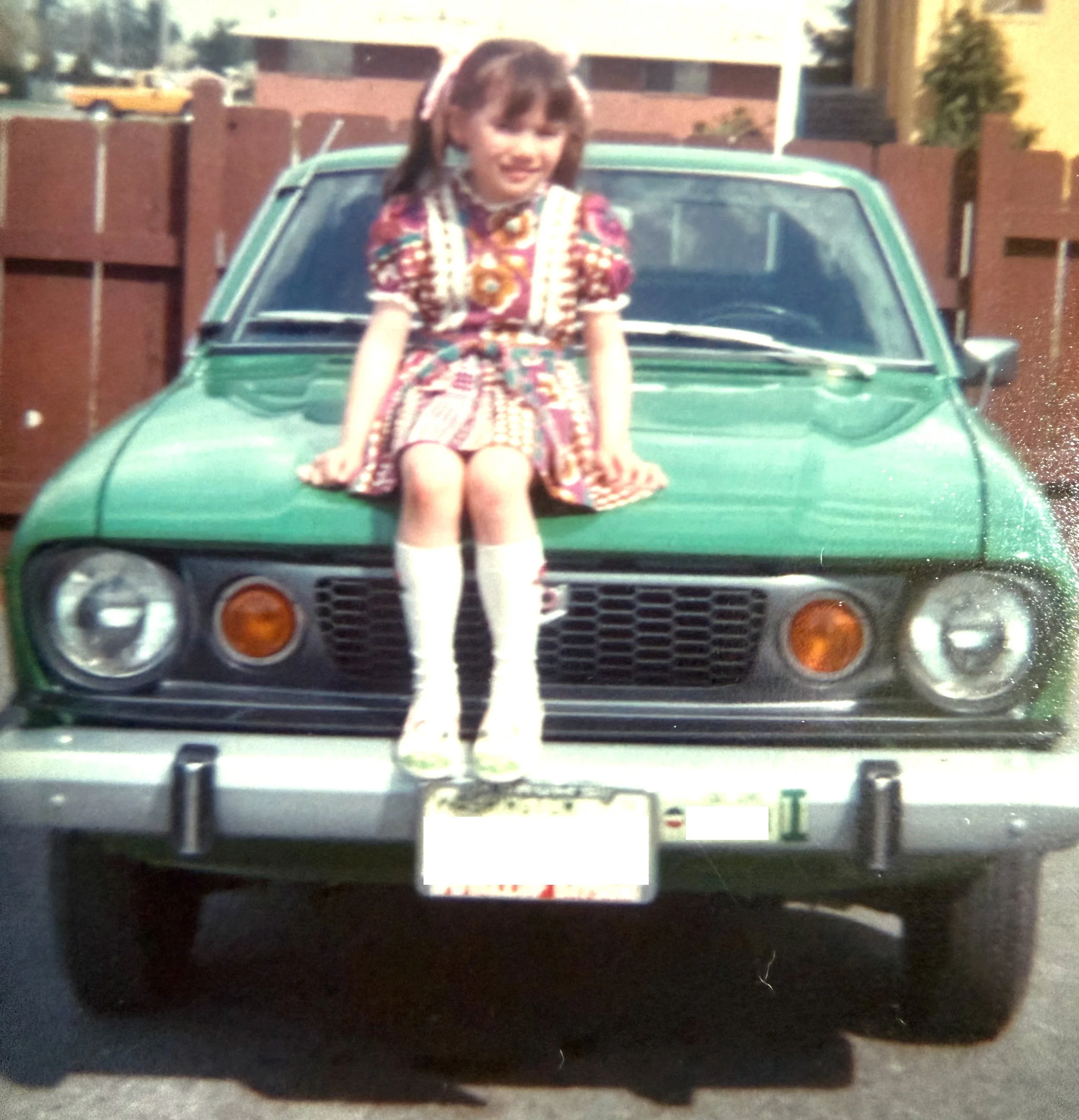
Tacoma, Washington 1975
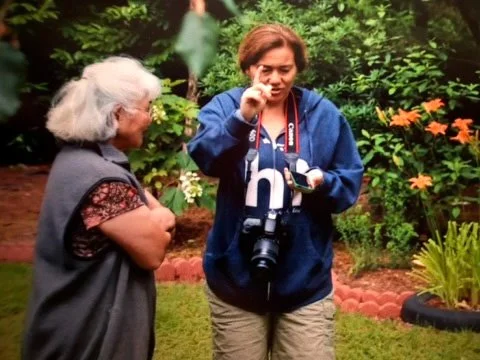
With my mother. Her backyard, August 2011.
THE INHERITANCE
She never called it a gift. She just lived it, and let me watch.
She loved to travel. Not the kind of travel that requires a plan and a budget and the right moment — the kind that just goes. She believed the world was worth seeing, and she found a way to see it even when the money wasn't there.
She loved photography. She saw things worth capturing and she stopped for them. The light. The moment. The place that would be gone if you didn't pause.
These were not lessons she taught me. They were things I absorbed the way you absorb everything at that age — without knowing, without choosing, just by being near someone who lived a certain way.
I didn't realize until much later what she had given me. Not furniture. Not money. Not an easy life.
The open road. A camera. And the belief that the most beautiful things are still out there, waiting for the people willing to go find them.
That's what I inherited.
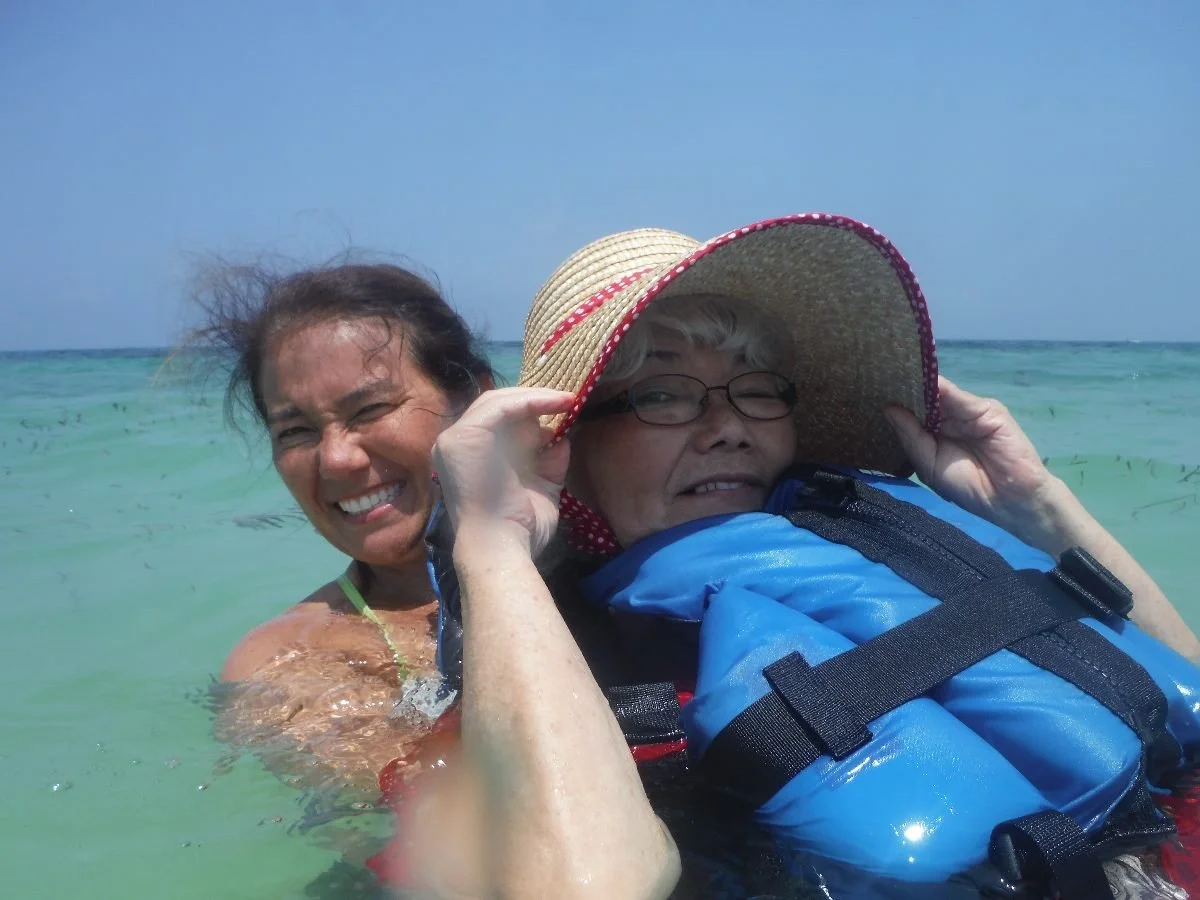
Onna, Okinawa 2016.
SHIGEYOSHI
My mother passed away in 2022.
I had spent years trying to figure out what came next for me — after a long career in the IT industry, after a demanding and ultimately toxic work environment, after stepping away from something that had taken more than it gave. I still had my values. I still had my integrity. But something was missing. And in that space I found the two things that had always been there, quietly waiting.
Travel. Photography.
Hers first. Then mine.
I started thinking about what it would mean to take what she gave me and turn it into something. Not just for myself — but for other women. Women who are ready to go. Women who have earned the open road and just need someone to go with them.
And I knew what to call it.
SHIGEYOSHI. Her family name. A word that means abundant good fortune. The name of the woman who sat on an empty floor in a foreign country with nothing but a four year old daughter and decided to be strong. The woman who drove across the American West for a neighbor. The woman who wrote Love, Julie in frosting on a birthday cake. The woman who was still laughing in the water in Okinawa at the age her mother had survived a war.
She gave me the road. She gave me the eye for the light. She gave me the belief that the world is worth seeing.
This business is my way of saying thank you.
SHIGEYOSHI — Go. You’ll know when you get there